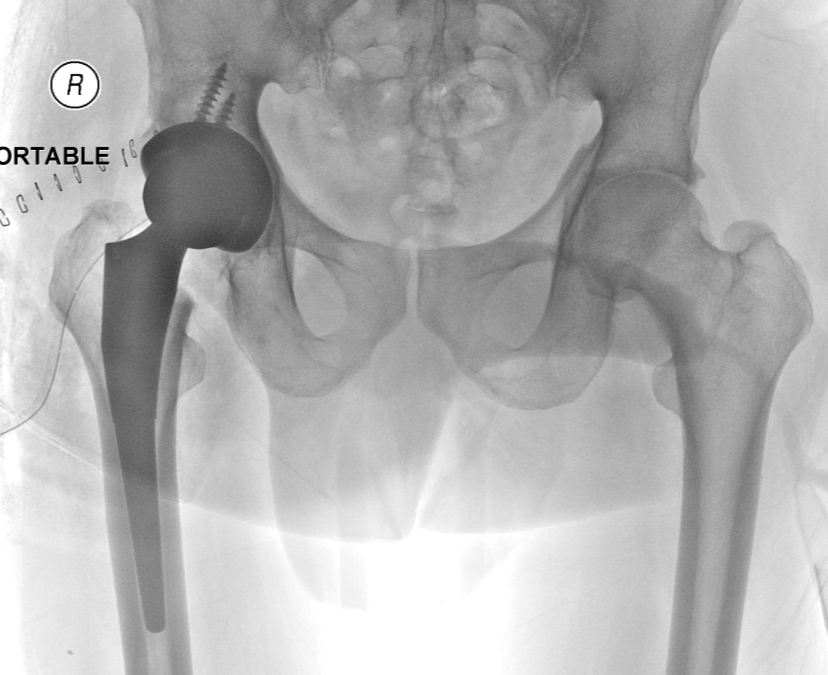
Some frequently asked questions about Total Hip Replacement Surgery
What is a total hip replacement?
It is a procedure in which the surgeon removes a painful or a worn off hip joint and inserts an artificial joint.
When is it recommended?
Hip joint replacement is done mainly when the joint wears off mainly after age 60 and older. Other Possible reasons for replacing the hip joint include:
Avascular necorsis of the femoral Head & Post Septic Sequale
When is it Contraindicated?
This surgery is usually not recommended if:
You have an active hip infection.
You are paralyzed or have nerve disease affecting the hip.
You have a terminal disease such as cancer that has spread to other parts of your body. You are grossly overweight (over 300 pounds).
What are alternative to the procedure?
Alternatives to this procedure include:
Medications: Using acetaminophen, aspirin, or other medicines for the pain and inflammation
Activity Restriction & Physiotherapy: limiting your activity and using a walking aid such as a cane or walker, avoiding activities that make the pain worse, such as climbing stairs or walking long distances using heat packs to relieve pain
Alternative Surgery: having the hip joint fused together.
How do I prepare for a total hip replacement?
Talk to someone who has had a hip replacement to get an idea of what the procedure and recovery period are like. Because you may need blood transfusions during the operation or during recovery after the operation, you may want to donate some of your own blood before the procedure.
Install equipment that will help you while you recover at home, such as an elevated toilet seat, a shower seat, and grab bars or handrails. Remove rugs and cords that might cause a fall.
Allow for time to rest after the operation. Find people to help you with your day-to-day duties and care for atleast the first week at home.
For 1 week before your surgery, do not take aspirin, ibuprofen (such as Motrin or Advil), or any other nonprescription pain relievers except for acetaminophen (such as Tylenol). You may take acetaminophen for pain.
If you are scheduled to have surgery, follow any instructions your health care provider may give you. Do not eat or drink anything after midnight and the morning before the procedure. Do not even drink coffee, tea, or water.
Follow your provider’s instructions about not smoking before and after the procedure. Smokers heal more slowly after surgery. They are also more likely to have breathing problems during surgery. For this reason, if you are a smoker, you should quit at least 2 weeks before the procedure. It is best to quit 6 to 8 weeks before surgery. Also, your wounds will heal much better if you do not smoke after the surgery.
What happens during the procedure?
You will be given a general or spinal anesthetic. A general anesthetic will relax your muscles and cause a deep sleep. It will prevent you from feeling pain during the operation. A spinal anesthetic is a drug that will not cause you to sleep but should keep you from feeling pain during the operation.
The surgeon makes a cut along the side of your hip, moves the muscles connected to the top of the femur (thighbone), and exposes the hip joint. The surgeon pulls the ball portion of the joint (the end of the femur) away from the socket part of the joint (the hipbone). The ball of the femur is cut with a saw and an artificial replacement part is attached.
The surgeon prepares the surface of the hipbone and, if it is worn, attaches a metal or plastic socket part to the hipbone. The surgeon inserts the new ball part of the femur into the socket part of the hip. Two drains may be inserted to help drain any fluid or blood from the new joint. The surgeon then reattaches the muscles to the top of the femur and closes the cut in the side of your hip.
You may need a blood transfusion. The hospital will use either your donated blood or blood from a matched donor.
What happens after the procedure?
After surgery, your hip will be covered with a padded dressing. Special boots or stockings are placed on your feet or legs to help prevent blood clots. A triangle-shaped cushion may be positioned between your legs to keep your legs from crossing or rolling in. A tube (catheter) may be placed in your bladder if you have trouble urinating.
You will be given a regular program of exercises to do each day as long as you are in the hospital. Your therapist will begin by helping you move from your bed to a chair. By the second day, you’ll begin walking longer distances using your crutches or walker. Your therapist will teach you exercises to begin strengthening the thigh and hip muscles.
You may stay in the hospital about 4 to 6 days, depending on how fast your hip heals. You can leave the hospital and go to a short term rehab facility or go home when:
You can safely get in and out of bed.
You can walk up to 75 feet with your crutches or walker.
You can go up and down stairs safely.
You have learned how to protect your hip while it recovers.
After you go home from the hospital, your physical therapist may visit you for in-home treatments. Your therapist will review your exercise program, continue working with you on your hip precautions, and suggest safety tips such as using elevated toilet seats and bathtub benches, and raising the surfaces of couches and chairs. This keeps your hip from bending too much when you sit down. The visiting nurse or therapist will suggest ways to make your home environment safe.
You will probably be using a cane instead of crutches in 3 to 4 weeks. Your staples will be removed 2 weeks after surgery. You will probably be able to drive within 3 weeks and walk without a cane or walker by 6 weeks. With your health care provider’s approval, you will be able to resume sexual activity 1 to 2 months after surgery.
You can expect your surgeon to follow you closely after your operation. Ask what other steps you should take and when you should come back for a checkup.
Tell your dentists or health care providers that you have an artificial joint. If you are having dental work performed, you need to take antibiotics for the day before and the day of your dental care. Antibiotics must be used before and after any medical or dental procedure for the rest of your life.
What are the benefits of this procedure?
You may resume a more normal life. You will be able to move your hip more easily and fully and less painfully. It will be easier for you to walk and do other activities that use your hip.
What are the risks associated with this procedure?
- There are risks when you have general anesthesia. Discuss these risks with your health care provider.
- A spinal anesthetic may not numb the area quite enough and you may feel some minor discomfort. Also,in rare cases, you may have an allergic reaction to the drug used for this type of anesthesia.
- There is a risk of infection or bleeding from the operation.
- A blood clot may form in the veins, escape into the bloodstream, and block an artery in the lungs. Youmay be given a blood thinner to try to avoid this.
- Your legs may not be the same length after the operation.
- Other bones may break during the surgery. This may require a longer hospital stay.
- The nerves in the hip area may be injured from swelling or pressure. This can cause some numbness.
- At the time of surgery the new ball joint is forced into the femur (thighbone) where the bone marrow is.As a result, pieces of fat in the bone marrow may become loose, enter the bloodstream, and get into thelungs.
- If you need a blood transfusion and have not donated your own blood, the hospital tries to match theblood. However, it is not possible to avoid reactions to donated blood 100% of the time. There is also therisk of acquiring blood-borne diseases, although the risk is low.
- The new hip joint will not move as well as a normal joint. It can be dislocated more easily. You must becareful not to sit too low or cross your legs.
- The replacement parts may become loose or break. This occurs a small percentage of the time and usually many years after the operation.
- Ask us how these risks apply to you by seeking a personal appointment.
When should I be worried or think about reconsult after an operation?
Call us or your health care provider right away if:
You have a fever.
You become short of breath or cough up blood.
You have chest pain.
You have pain that gets worse after 24 hours.
You have foul smelling drainage coming from the incision.
Your calf, thigh, or hip has unusual swelling, warmth, or redness.
Allied resource:
 Dr Vaibhav Bagaria